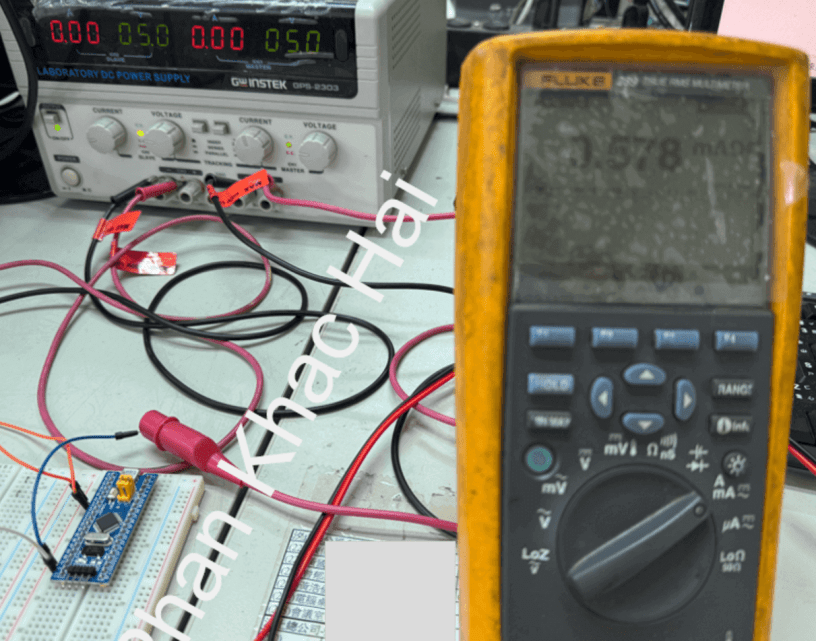
I recently bought a new BluePill STM32F103C8T6 development board from Shopee. As I’m constantly considering upgrades for my current wireless node device to enhance its power and functionalities. Power consumption is a crucial factor in selecting the right microcontroller unit (MCU). Therefore, I decided to take the test in order to better understand the power consumption of the BluePill. I also referred to some insightful articles, which you can explore here:
- STM32 power saving: sleep, deep sleep, shutdown, and power consumption
- Getting started with STM32 and things you need to be aware of
While my test results didn’t match those of other authors, such as 1.914 mA and 2.5 mA, the good news is that I measured a current drop of about 3.2 mA when the module entered deep sleep mode. To avoid repetition, I recommend reading the following article to get started with the STM32F103C8T6 Blue Pill. In this article, I will focus on sharing the results of my power consumption tests for your reference.
In my testing process, I utilized the Arduino IDE for programming and opted for the FTDI USB interface to communicate with the STM32 Blue Pill. To assess power consumption, I conducted three distinct tests: (1) normal mode, (2) sleep mode, and (3) deep sleep mode. For the sleep test mode, I utilized the stm32duino/STM32LowPower library, which can be accessed here.
Test Results:
a) Normal Mode:
Program:
void setup() {
    pinMode(PC13, OUTPUT);
}
void loop() {
    digitalWrite(PC13, HIGH);
    delay(2000);
    digitalWrite(PC13, LOW);
    delay(2000);
}
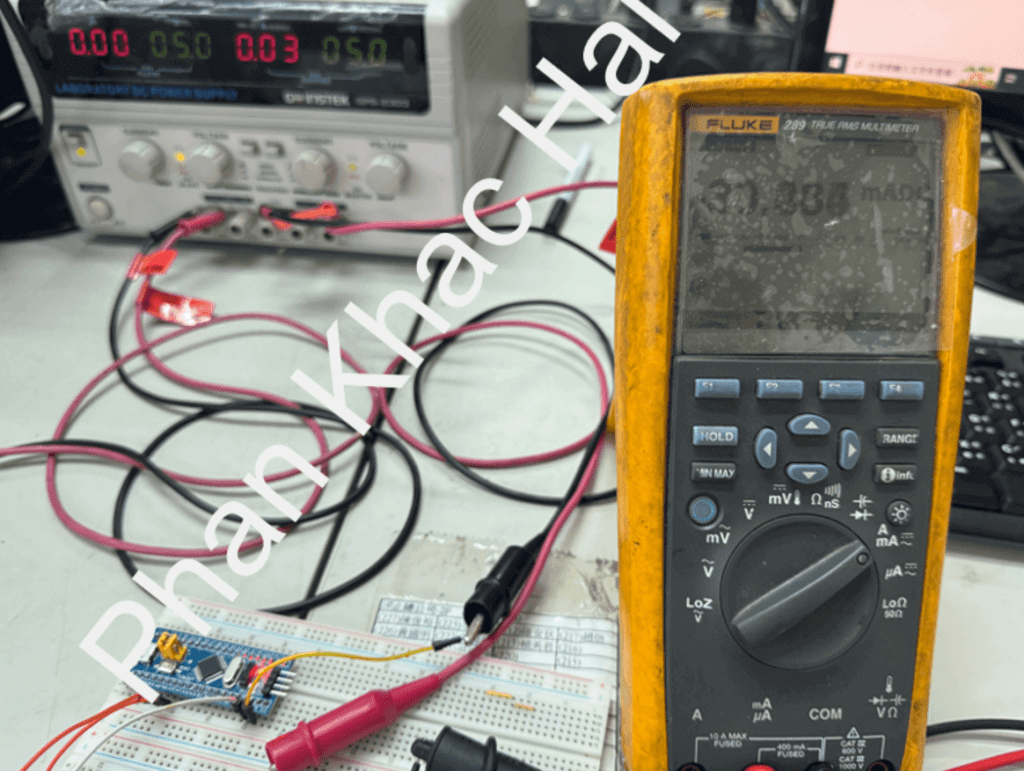
Result: 31.059 mA:
b) Sleep Mode:
Program:
#include "STM32LowPower.h"
void setup() {
    pinMode(PC13, OUTPUT);
    LowPower.begin();
}
void loop() {
    digitalWrite(PC13, LOW);
    delay(2000);
    digitalWrite(PC13, HIGH);
    delay(2000);
    LowPower.sleep();
}
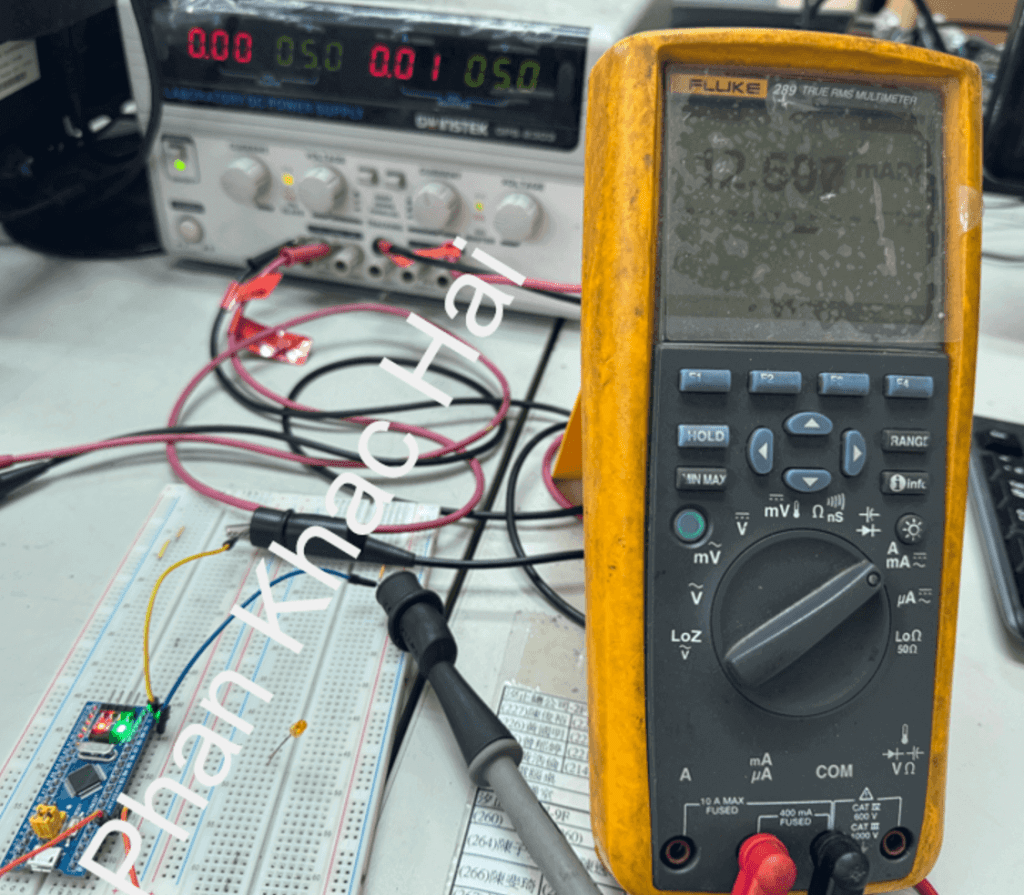
Result: 12.697 mA:
c) Deep Sleep Mode:
Program
#include "STM32LowPower.h"
void setup() {
    pinMode(PC13, OUTPUT);
    LowPower.begin();
}
void loop() {
    digitalWrite(PC13, LOW);
    delay(2000);
    digitalWrite(PC13, HIGH);
    delay(2000);
    LowPower.deepSleep();
}
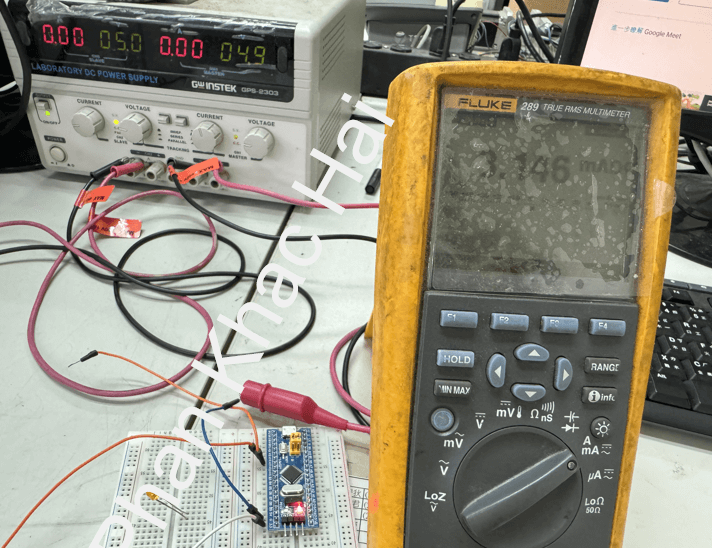
Result: 3.146 mA:
The result after removing the power LED: 0.578 mA:

In conclusion, the BluePill STM32F103C8T6 shows promise as a powerful MCU for future wireless node applications. However, its power consumption is slightly higher than desired. I intend to explore alternatives such as the Black Pill STM32F404 or conduct further tests on the STM32 Blue Pill to optimize power consumption for my application.
 PHAN KHAC HAI