Introduction
In an increasingly noisy world, monitoring and analyzing noise levels have become essential, whether for environmental assessments, workplace safety, or everyday life. In this article, we explore a practical project that involves measuring noise levels with an Arduino Uno and the versatile KE-ZS-BZ-TTL-05 noise sensor module.

Figure 1: Arduino Uno and the KE-ZS-BZ-TTL-05 noise sensor module
The KE-ZS-BZ-TTL-05 Sensor
The KE-ZS-BZ-TTL-05 sensor is designed to measure a wide range of noise types, from 30dB to 130dB, in real-time. This sensor finds applications in various fields, including environmental noise monitoring, traffic noise analysis, workplace safety assessments, construction site noise evaluations, and everyday noise monitoring. Its ease of use and compatibility with Arduino make it an ideal choice for noise-related projects.
KE-ZS-BZ-TTL-05 Sensor Specifications
Let’s delve into the key specifications of the KE-ZS-BZ-TTL-05 sensor:
Product Overview
The KE-ZS-BZ-TTL-05 onboard noise module is designed for real-time measurement of diverse noise types, including environmental, traffic, workplace, construction, and social noise. With this module, complex noise signal processing becomes hassle-free, allowing users to focus on their areas of expertise and create value more efficiently.
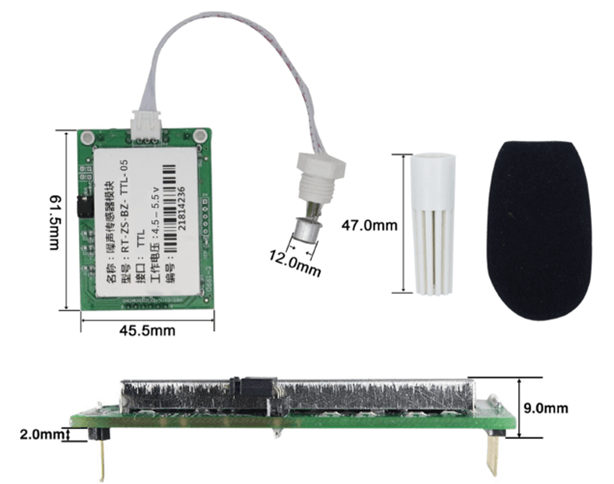
Figure 2: Detail for KE-ZS-BZ-TTL-05 Sensor
Key Features
- PCB-mounted installation.
- Wide measurement ranges from 30 to 130 dBA and a broad frequency range from 20 to 12.5 kHz.
- Utilizes a high-performance pre-polarized back-polarized electret condenser microphone, offering a wide dynamic range and stable performance.
- Output interfaces are available in TTL or RS-485, with factory options.
- Offers both slow and fast measurement modes to meet various customer requirements.
- Power supply options include 4.5V to 5.5VDC and 10V to 28VDC.
Table 1: KE-ZS-BZ-TTL-05 Sensor Technical Specification
| Technical Specification | Value | |
| Operating Voltage | 4.5~5.5V (default), 10~28V (optional) | |
| Power Consumption | 18.9mA@5V, 31.0mA@12V, 27.8mA@24V | |
| Transmitter Circuit Operating Temperature | -20°C to +60°C, 0%RH to 95%RH (non-condensing) | |
| Output Signal | UART (TTL) | Output Voltage: 0~3.3V |
| Input Voltage: 0~3.3V compatible with 5V | ||
| RS-485 | ModBus-RTU Communication Protocol | |
| Analog Output | Output Voltage: 0~3V corresponding to 30~130dB | |
| UART or RS-485 communication parameters | 9600 N 8 1 | |
| Measuring range | 30dB~130dB | |
| Frequency Weighting | A-weighted | |
| Frequency Response Range | 20Hz~12.5kHz | |
| Response Time | Fast Mode: 500ms, Slow Mode: 1.5s | |
| Stability | Within 2% during the operating cycle | |
| Reference Calibration Points | 94dB and 114dB calibration at 20uPa, 1kHz | |
| Noise Accuracy | ±0.5dB (at reference sound level, 94dB @ 1kHz) | |
| Impact of Dust Cover | Negligible impact within 50~115dB range, ≤0.5dB | |
Arduino Uno
Overview
Arduino Uno is a versatile microcontroller board based on the ATmega328P, offering 14 digital input/output pins (with 6 PWM outputs), 6 analog inputs, a 16 MHz ceramic resonator, USB connectivity, a power jack, an ICSP header, and a reset button. It comes fully equipped to support the microcontroller’s functions and is widely documented and used throughout the Arduino family.
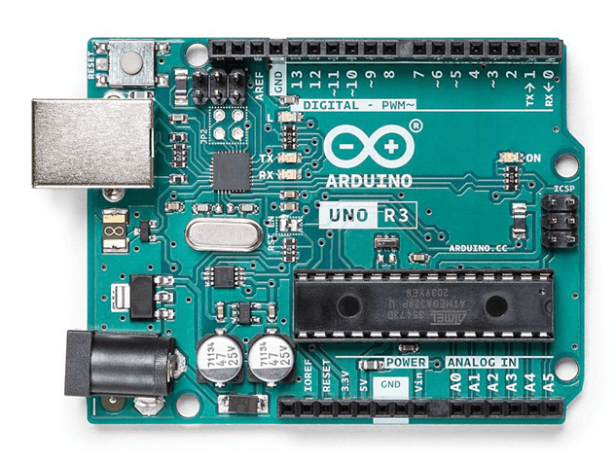
Figure 3: Arduino board
Key Features
- Digital I/O Pins: 14
- Analog Input Pins: 6
- PWM Pins: 6
- UART, I2C, and SPI communication capabilities.
- Operating Voltage: 5V
- Input Voltage (Recommended): 7-12V
- Input Voltage (Limit): 6-20V
- Low power consumption with an average current of approximately 50 mA.
Table 2: Arduino Uno Technical Specification
| Technical Specification | Value |
|---|---|
| Microcontroller | ATmega38P – 8 bit AVR family microcontroller |
| Operating Voltage | 5V |
| Recommended Input Voltage | 7-12V |
| Input Voltage Limits | 6-20V |
| Analog Input Pins | 6 (A0-A5) |
| Digital I/O Pins | 14 (Out of which 6 provide PWM output) |
| DC Current on I/O Pins | 40mA |
| DC Current on 3.3V Pin | 50mA |
| Flash Memory | 32 KB (0.5 KB is used for Bootloader) |
| SRAM | 2kB |
| EEPROM | 1kB |
| Frequency (Clock Speed) | 16MHz |
Noise Measurement Application
To measure noise levels effectively, the KE-ZS-BZ-TTL-05 sensor requires specific circuitry and Arduino programming. By integrating this sensor with Arduino, it easily collects and analyzes noise data for various applications. Refer to the sensor’s datasheet and Arduino’s documentation for detailed setup instructions.
Wiring Circuit
Proper wiring is crucial for the success of any electronics project. The voltage divider is added to protect the sensor since the Arduino Tx (pin 9) is 5V output level. However, it may not need it based on the sensor specification mentioned above.
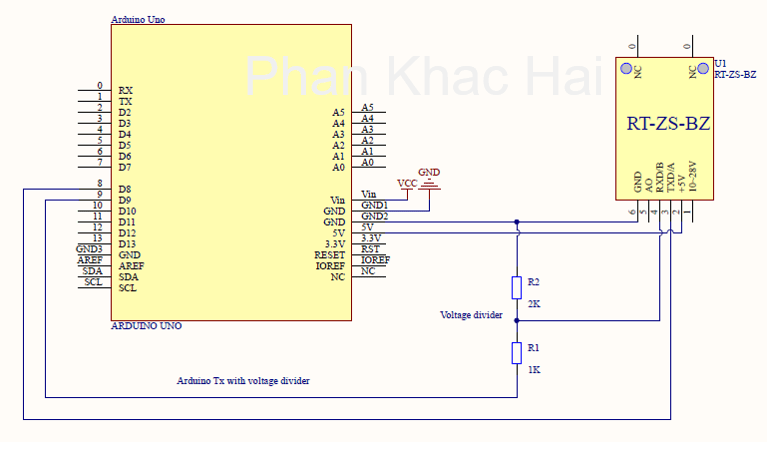
Figure 4: Wiring for KE-ZS-BZ-TTL-05 sensor and Arduino
Arduino Code
The Arduino code for this project can be found on GitHub. It includes comprehensive instructions on how to interface with the KE-ZS-BZ-TTL-05 sensor and obtain accurate noise level measurements.
Data Acquisition
After uploading the Arduino sketch to the Arduino board, real-time noise monitoring data was collected using the Arduino IDE’s serial monitor tool. The data was gathered in an office environment, and three specific scenarios were examined:
- Morning Meeting Time: The highest recorded noise level during the morning meeting reached 85 dB (Figure 7).
- Noon Rest Time: The lowest noise level detected was below 52 dB (Figure 5).
- Working Time: Noise levels during working hours showed significant fluctuations, ranging from 52 dB to 68 dB (Figure 6).
These results demonstrate that the sensor effectively captured variations in noise levels within the office environment. This capability suggests the sensor’s potential utility in future applications, particularly in wireless sensor networks.

Figure 5: Detecting noise level during the noon break time

Figure 6: Detecting noise level during working time

Figure 7: Detecting noise level during the morning meeting time
Conclusions
In summary, the KE-ZS-BZ-TTL-05 sensor, in conjunction with an Arduino, provides a reliable solution for measuring noise levels across various applications. While the system performs effectively upon setup, it’s important to note that calibration of parameters may be required for precise measurements.
 PHAN KHAC HAI